Obstetric-Gynecological Ultrasound Institute
The Obstetric-Gynecological Ultrasound Institute is part of the Women and Maternity Division at Shamir Medical Center (Assaf Harofeh). In addition to serving patients of the Women and Maternity Division, the institute also supports the entire medical center and serves as a national referral center for complex cases in obstetrics and gynecology referred by community physicians.
Message from the Director
“The latest developments in ultrasound (‘sonographic imaging’) allow us to gain a deeper look at the female reproductive organs as well as at what takes place in the uterus during pregnancy. Beyond the extraordinary experience of observing the fetus for the expectant parents, this represents a scientific breakthrough which, combined with the expertise of our physicians, enables detailed and accurate identification of a wide variety of conditions and findings, and, when necessary, the provision of appropriate treatment,” says Prof. Maimon, Head of the Department.
The institute is situated in a new, spacious, and modern facility, equipped with state-of-the-art, high-quality equipment.
It includes a waiting room equipped with a television and cold drinks for patients’ comfort, as well as a seminar room where examinations can be viewed while preserving patients’ privacy. The setting allows partners to be present during examinations and to receive a concluding consultation in a separate room.
Equipment and Facilities
The institute was recently renovated and now features five modern, well-designed treatment rooms, all equipped with advanced technology, including color Doppler and cutting-edge 2D and 3D ultrasound imaging systems. The equipment includes abdominal probes and vaginal probes with needle-guidance systems for transvaginal procedures. There is also the option of recording complex examinations for further data analysis and interpretation.
The Team
The institute’s staff includes specialist physicians in obstetrics and gynecology with expertise in ultrasound imaging, a pediatric cardiologist, and a midwife nurse. Alongside them work licensed ultrasound technicians, certified by the Ministry of Health, and medical secretaries.
The physicians work as part of a multidisciplinary team, in close and fruitful collaboration with specialists from the Women’s Division across all subspecialties, and with experts in other medical fields, such as genetics, pediatrics, pediatric surgery, pediatric urology, pediatric orthopedics, radiology, and more.
Treatments and Procedures
In Obstetrics, the institute performs diagnostic ultrasound examinations at all stages of pregnancy, including basic obstetric ultrasound, nuchal translucency scan to assess the risk of Down syndrome, anomaly scans, and fetal evaluation using blood flow Doppler studies. The Shamir Medical Center Ultrasound Institute was the first in Israel to perform the nuchal translucency screening test for Down syndrome, leading to the detection of numerous chromosomal abnormalities and congenital anomalies. In addition, the institute performs invasive procedures, such as amniocentesis for genetic diagnosis, chorionic villus sampling, umbilical cord blood sampling, fetal reduction in multiple pregnancies, and fetal heartbeat termination in late-term pregnancy terminations.
The institute also offers fetal echocardiography and fetal MRI, as part of its multidisciplinary care.
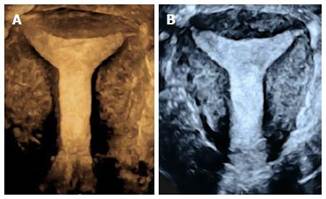
In Gynecology, the institute performs diagnostic ultrasound of the uterus, including 3D ultrasound for the detection of uterine malformations, as well as saline sonohysterography and hydrosalpingosonography for visualizing tubal patency.
Invasive procedures performed in the institute include needle aspiration of cysts, abscesses, and pelvic masses via abdominal or transvaginal approach, diagnosis and management of ectopic pregnancies, and fluid aspiration from the pelvis and abdominal cavity.
Women with a history of cesarean delivery are invited for scar assessment, as cesarean scars can affect future pregnancies, fertility treatments, and intermenstrual bleeding.
The institute team works closely with specialists in gynecology, oncology, and minimally invasive surgery for the diagnosis and management of reproductive system conditions, such as endometriosis, benign and malignant tumors, biopsies, as well as decision-making regarding continued treatment for each patient.
- Tests to Be Performed During Pregnancy
- Gynecological Ultrasound
- Nuchal Translucency
- Anatomy Scan
- Chorionic Villus Sampling (CVS)
- Amniocentesis
- Fetal Echocardiography
- The Multidisciplinary Clinic for Diagnosis, Monitoring, and Treatment of Intrauterine Growth Restriction (IUGR)
- Endometriosis Clinic
Tests to Be Performed During Pregnancy
The life cycle begins here.
At the Ultrasound Institute of the Women's Division, a variety of examinations and procedures are performed using the most advanced medical equipment, including 3D imaging technology. This service is available directly to women seeking care, as well as to those referred from departments and medical services within the Women’s Division at the hospital or from the community.
The institute provides complete and comprehensive medical opinions at every stage of pregnancy. The staff has extensive experience in complex obstetric and gynecological cases. The institute is located in a new, spacious building with five examination rooms, all equipped with advanced imaging systems, including some of the most sophisticated 3D devices in Israel.
Complex examinations can be recorded onto CDs for documentation and further data review. The facility includes a seminar room where examinations can be viewed remotely, while maintaining patient privacy. The institute’s setup allows a companion to join during the examinations as well as the final consultation.
Technology and Procedures
The Ultrasound Institute at the Shamir Medical Center (Assaf Harofeh) is among the first and oldest in Israel. It was the first institute to perform nuchal translucency testing (continuously since 1996).
The institute has conducted thousands of examinations, identifying hundreds of cases of chromosomal abnormalities and various fetal anomalies.
During pregnancy, it is possible to assess gestational age, fetal size and weight, placenta and amniotic fluid, and examine fetal organs to detect anomalies and markers for chromosomal abnormalities, such as Down syndrome.
Several ultrasound examinations can be performed during routine prenatal care.
Examinations by Gestational Week
- 7–8 weeks: To confirm the presence of a live embryo in the uterus and accurately determine gestational age.
- 11–14 weeks: Nuchal translucency testing can be performed to calculate the risk level for Down syndrome and other chromosomal abnormalities.
- 12–14 weeks: Chorionic villus sampling (CVS) can be performed.
- 14–16 weeks: Early screening can be performed.
- 16–20 weeks: Amniocentesis is recommended.
- 18–24 weeks: A detailed (mid-pregnancy) scan can be performed.
- 30–32 weeks: A third-trimester scan is recommended to assess proper fetal development. Information towards the approaching birth includes placenta location, placental attachment markers, blood flow, and fetal vessels. Targeted organ-specific scans may also be performed if a problem was identified during screening.
What Is 3D Ultrasound and What Are Its Advantages?
Two-dimensional (2D) and three-dimensional (3D) imaging are performed using the same device. When selecting the “3D” function, additional information and extra imaging planes are obtained, producing more tangible images for both parents and clinicians.
This offers several advantages, as both parents and clinicians can view 3D images of the fetus.
Recording the exam onto digital media enables later image processing for medical purposes and consultation with colleagues, both close and distant, referred to as Post Imaging Processing.
(In contrast, with 2D imaging, the doctor must always re-perform the exam.)
What are the advantages for parents, beyond natural curiosity? Studies show that colored 3D images increase emotional bonding with the fetus (a bonding tool).
Gynecological Ultrasound
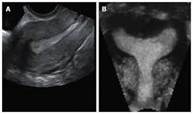
Gynecological ultrasound allows evaluation of abnormal findings in the reproductive organs, such as masses, pelvic cysts, fibroids, or polyps in the uterus. In special cases, Doppler technology is used to characterize blood flow in the target organs.
It also allows assessment of uterine structural abnormalities, findings within the uterine cavity, and scanning of the uterus and pelvis for adenomyosis and endometriosis.
Additionally, ultrasound is used to assess tubal patency and uterine abnormalities — hydrosalpingosonography.
Who Is This Examination For?
- Women undergoing fertility treatments due to tubal blockage.
- Women with suspected uterine abnormalities before fertility treatment or due to recurrent pregnancy loss or preterm births.
- Women after one or more cesarean sections, for evaluation of the surgical scar (niche).
- Women with suspected findings in the uterine cavity, such as polyps, adhesions, or retained pregnancy tissue.
The examination is performed using an advanced ultrasound device with 3D and 4D capabilities, with saline infusion to visualize the uterine cavity and a sonolucent agent to assess tubal patency.
The unit’s staff works closely with specialists in gynecology, gynecologic oncology, endoscopic surgery, urogynecology, and fertility.
In special cases, samples are taken from target organs for cytological and histopathological evaluation.
Shared clinics operate across these fields, and imaging results are jointly interpreted by experts.
Nuchal Translucency
Nuchal translucency is an ultrasound examination performed at 11–14 weeks of pregnancy, and its purpose is to determine the risk level of carrying a fetus with Down syndrome.
Nature of the Examination
Nuchal translucency is an ultrasound examination performed at 11–14 weeks of pregnancy, and its purpose is to determine the risk level of carrying a fetus with Down syndrome.
During the exam, the thickness of the fluid collected at the back of the fetal neck is measured. Abnormally increased fluid accumulation indicates a higher risk of genetic abnormalities, such as Down syndrome and others.
The fetal length and viability are also measured.
The data is entered into specialized software that calculates the risk level. The test’s accuracy is approximately 60%, but when combined with first-trimester biochemical screening, the detection rate of Down syndrome fetuses may reach about 85%.
Advantages
- Performed very early in pregnancy, allowing early termination of pregnancy if a problem is detected.
- Non-invasive ultrasound examination.
- Provides additional information about fetal size and may help rule out other significant anomalies.
- The optimal screening test for twin and triplet pregnancies.
- Recommended also for women who already plan to undergo amniocentesis later in pregnancy.
Procedures during the examination
There are no special instructions before the examination.
The procedure is simple and non-invasive, performed in most cases using external abdominal ultrasound. If all the essential organs cannot be visualized, the scan is performed transvaginally. The exam is short, lasting 10–20 minutes.
There are no special instructions after the examination, and no concerns about complications or side effects.
Anatomy Scan
What is an anatomy scan?
An anatomy scan is an ultrasound examination in which the physician carefully examines the fetus’s organs and verifies their normal development. It is essentially a “dynamic” imaging of the organs, aimed at detecting anatomical abnormalities in the fetus. In some cases, this examination may also indicate suspicion of a genetic or chromosomal abnormality.
In principle, the anatomy scan is not intended to diagnose chromosomal abnormalities and does not replace biochemical screening or genetic amniocentesis.
During pregnancy, two anatomy scans are performed. In addition, a third-trimester scan is recommended to assess the fetus's proper development. Information relevant to the approaching birth includes: placental location, placental attachment markers, blood flow, and fetal blood vessels.
The list of organs examined is standardized and follows the guidelines of the Israeli Society for Ultrasound in Obstetrics and Gynecology (2007) and the Ministry of Health.
Recommended timing for the scans
- Early anatomy scan: weeks 14–16 of pregnancy
- Late anatomy scan: weeks 21–24 of pregnancy
- Third-trimester scan: weeks 28–32 of pregnancy – performed as the fetus approaches birth and includes: fetal size assessment, blood flow in fetal and placental vessels, and, within the limitations of gestational age, evaluation of the structure, development, and proper function of fetal organs.
Importance of the examination
- Evaluation and preparation for birth
- Fetal organ development is continuous and rapid, making it essential to re-evaluate the organs during early stages of pregnancy
This important examination is not included in the national health basket and costs 1,042 NIS.
To schedule an appointment, please contact the Ultrasound Unit.
Procedure
There are no special instructions before the examination.
The procedure is simple and non-invasive, performed in most cases using external abdominal ultrasound. If all the essential organs cannot be visualized, the scan is performed transvaginally.
There are no special instructions after the examination, and no concerns about complications or side effects.
Clalit Mushlam member?
You may now undergo early/late anatomy scans at the Shamir Medical Center.
Chorionic Villus Sampling (CVS)
How the test is performed
The test is usually performed between weeks 12 and 14. It can be performed through the abdomen or via a transvaginal approach (similar to taking a cervical swab).
During the test, a sample of placental tissue is obtained, from which cell cultures are grown for chromosomal or genetic testing.
At the Shamir Medical Center (Assaf Harofeh), a cytogeneticist is present in the room during the procedure, examining the sample “in real time” with a specialized microscope. Only after the cytogeneticist confirms that the sample is sufficient and of good quality does the procedure end; the sample is then sent to the genetics institute for further processing.
After the test, the patient must rest for 48 hours.
Possible risks and complications
- Fetal injury – Theoretical only, since the examination is ultrasound-guided.
- Infection – As with any invasive procedure, some risk exists, but today, with modern sterilization, the chance is very low.
- Water breaking (rupture of membranes) – This is the primary concern during Amniocentesis. It occurs if the small puncture in the amniotic sac does not heal properly.
* The test has a cost. Reimbursement eligibility should be checked with HMOs and/or private insurance.
Amniocentesis
Amniocentesis is a medical procedure used to diagnose chromosomal or genetic abnormalities in the fetus.
Under ultrasound guidance, a needle is inserted through the mother’s abdomen into the uterus, and a small amount of amniotic fluid, within which the fetus develops, is withdrawn.
About the test
From the extracted fluid, fetal cells are isolated for genetic testing. Amniotic fluid is essentially fetal urine, and the withdrawn amount is naturally replenished by the fetus within a few hours. The major advantage of amniocentesis: it can detect chromosomal abnormalities and many genetic disorders with near-complete certainty. However, it cannot detect all congenital genetic defects.
Amniocentesis is performed when other tests in pregnancy indicate an increased risk of fetal genetic abnormalities, or when the mother is 35 years or older. Still, the decision to undergo amniocentesis is entirely individual.
Amniocentesis is usually performed between weeks 16 and 20 of pregnancy.
Procedure and instructions
The procedure includes:
- Withdrawal of amniotic fluid using a thin needle. Local anesthesia is usually unnecessary.
- 30–40 mL of amniotic fluid is withdrawn; this amount is replenished within a few hours and does not harm the fetus.
- The needle is inserted through the abdominal wall into the uterine cavity under continuous ultrasound guidance.
After the test, rest for up to 48 hours is required.
Possible risks and complications
- Fetal injury – Theoretical only, since the procedure is ultrasound-guided.
- Infection – As with any invasive procedure, some risk exists, but today, with modern sterilization, the chance is very low.
- Water breaking (rupture of membranes) – This is the primary concern during Amniocentesis. It occurs if the small puncture in the amniotic sac does not heal properly.
* For women under age 35, the test has a cost. Reimbursement eligibility should be checked with HMOs and/or private insurance.
Fetal Echocardiography
The examination is performed in special cases and in situations of increased risk from week 15 onward by Dr. Lital Gordin Kopilov, a specialist in pediatric cardiology and a member of the unit’s medical team.
During the exam, imaging of the heart chambers and major blood vessels, along with measurement of heart rate and blood flow at various points, is performed. At the end of the exam, recommendations and cardiology counseling are provided for the continuation of the pregnancy and delivery.
A key advantage of undergoing the exam in the Ultrasound Unit is that it is performed jointly by the cardiologist and the unit’s physicians, who are experts in fetal anatomical surveys. The teamwork among specialists enables a comprehensive view of the fetus and coordinated professional counseling by a multidisciplinary team.
The Multidisciplinary Clinic for Diagnosis, Monitoring, and Treatment of Intrauterine Growth Restriction (IUGR)
The multidisciplinary IUGR clinic – the safe place for you and your baby on the way!
An experienced team of specialists in managing and monitoring high-risk pregnancies.
Personal support and guidance throughout the process, with high availability
Clinic Director: Dr. Marina Peker Zlotin
What we offer:
- Ultrasound with Doppler
- Third-trimester anatomical survey
- Advanced blood tests unique to diagnosing intrauterine growth disorders
- Fetal echocardiography
- High-risk pregnancy monitoring
- Genetic counseling when needed
How to access the service:
Your treating physician, who follows your pregnancy, performs the initial diagnosis and refers you to the high-risk pregnancy clinic, and will inform you which tests you need.
At our clinic, we will guide you through all the necessary examinations under one roof.
A referral form (Form 17) is required for each test.
Endometriosis Clinic
Endometriosis is a gynecological condition in which endometrial tissue spreads within the pelvis and causes menstrual pain, pain during intercourse, infertility, ovarian cysts, and sometimes gastrointestinal or urinary symptoms.
This is a chronic condition that can significantly affect the patient’s quality of life.
Treatment includes hormonal medication and, when necessary, surgical intervention.
Diagnosis is based on medical history, gynecological examination, and a targeted pelvic ultrasound for endometriosis.
At the Women and Maternity Division at the Shamir Medical Center (Assaf Harofeh), a multidisciplinary endometriosis clinic operates, combining counseling by a gynecologist specializing in endometriosis, targeted ultrasound, and fertility counseling when required or requested.
If surgery is necessary, procedures are performed using laparoscopic (minimally invasive) or robotic techniques. Depending on the findings, some surgeries are performed in collaboration with the surgical and urology departments.
To schedule an appointment:
Send a referral from your gynecologist to fax: 08-9779682
Or by email: orna@shamir.gov.il
For information and additional questions, contact the clinic: 08-9779680/1
Clinic Team:
Gynecologists – Prof. Noam Smorgick, Dr. Neta Eisenberg, Dr. Maya Naor
Fertility specialist – Dr. Sarit Avraham
Ultrasound specialist – Dr. Orna Levinson
Tests and Treatments Performed at the Unit
- Early and late anatomical surveys and third-trimester survey
- Targeted fetal examination
- Nuchal translucency
- Amniocentesis
- Chorionic villus sampling
- Amniotic fluid needle aspiration
- Umbilical cord blood sampling
- Intrauterine fetal blood transfusion
- Fetal echocardiography
- Fetal reduction / selective reduction
- Aspiration of benign ovarian cysts
- Aspiration of fluid findings in the lower abdomen
- MTX injection for ectopic pregnancy
- 3D ultrasound for uterine anomalies
- Ultrasound of the uterine cavity and fallopian tube patency (hydrosalpingosonography)
- Pelvic and reproductive organ ultrasound for suspected endometriosis
Physicians Performing Amniocentesis
Prof. Roni Maimon – Department Director
Dr. Adi Orenstein
Dr. Nerina Gloyan
Dr. Eli Dreizin
Dr. Edward Hod
Dr. Orna Levinson
Prof. Israel Meizner
Prof. Yaakov Meltzer
Dr. Eva Mercak
Dr. Unit Sela-Guttman
Dr. Ariel Zimmerman
Prof. Ron Ronel
Dr. Hagit Refaeli
Dr. Shimrit Shor
Dr. Orna Shaked
Agreements
- Clalit Mushlam
The Shamir Medical Center (Assaf Harofeh) has an agreement with Clalit Health Services that allows Clalit Mushlam and Platinum members to undergo pregnancy ultrasound examinations. - Agreement with the IDF
The Shamir Medical Center (Assaf Harofeh) has an agreement with the Israel Defense Forces, enabling female soldiers in regular or career service to undergo various pregnancy tests.