Heroes of the home front/ Or Hadar for YNET 5.3.2026
As soon as I enter the operating room, the focus is on the patients. You simply disconnect, living inside an aquarium. You see an injury in front of you and concentrate on it, and all the noise around you becomes completely irrelevant,” says Prof. Lior Heller, head of the Department of Plastic Surgery at Shamir Medical Center (Assaf Harofeh).
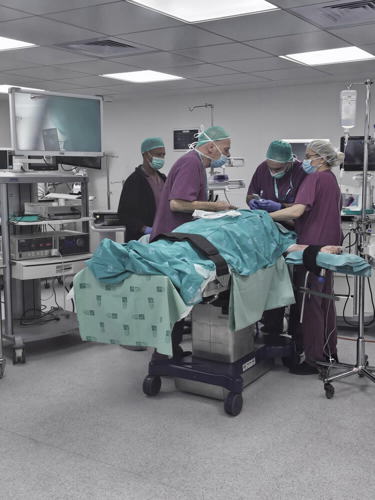
With the outbreak of Operation Epic Fury, three operating rooms were built in the hospital’s protected underground complex in the parking lot. Since then, dozens of surgeries have already been performed there, many of them during missile attacks. Among them was an urgent operation to save the leg of a young woman who was seriously injured in a car accident. The surgery lasted about five hours, during which eight sirens were heard. How do you overcome the stress and fear? “Behind all the tubes and the technical work there is a patient with a face and a story that you want to save, and that gives you great motivation,” he explains.
For Prof. Heller and his wife - who is also a doctor at one of the hospitals in central Israel - there was never any hesitation about going to work when the attack began. “I don’t want to appear like some big hero, but in the end you get up and go because you have responsibility toward your patients.”
The operating rooms were built with careful planning. They are separated from one another by drywall partitions, but the working conditions are still far from those that exist in normal times. “I lived in the United States for 16 years, and if I told my colleagues there about the situation - how we operate - and said that we still manage to keep a good spirit, they wouldn’t believe it,” Prof. Heller says with a smile. “But we are in a protected place, and we trust the interceptors just as a patient entrusts their fate to a doctor. The most stressful moments are actually when I’m not at the hospital—when I’m exposed on the road on my way home.”